More About The Countess
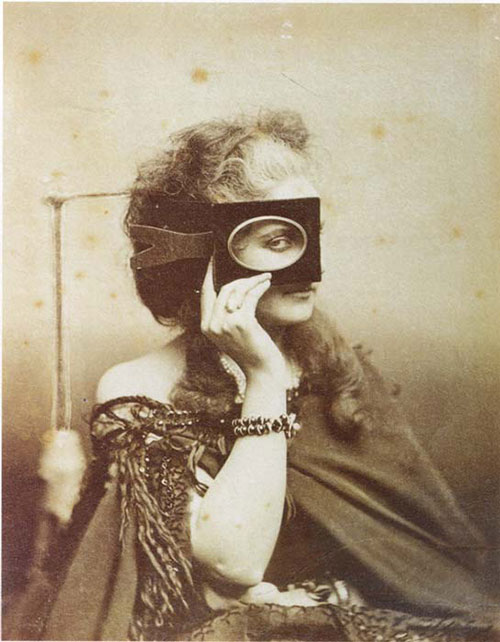
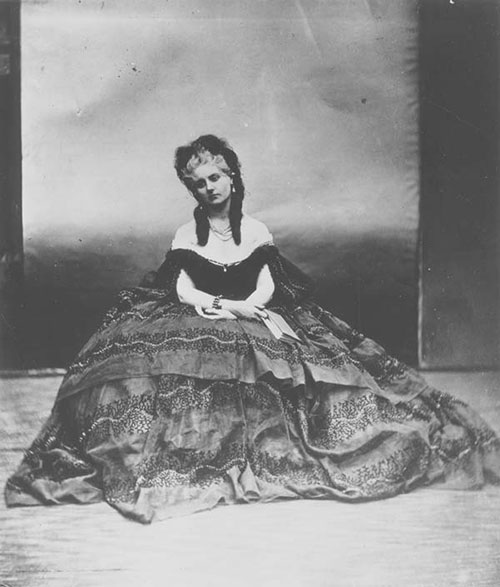
Conversations with the Countess of Castiglione began with fascination more than with facts. We knew that the Countess was a nineteenth-century Italian noblewoman who had briefly been a lover of Napoleon III, who had lived most of her life (1837-1899) in Paris, and who was legendary in her youth for her great beauty, wit, and intelligence. But mostly we knew the Countess as the author of hundreds of photographic self-portraits, unique in 19th century photo history not so much for their formal innovation but for the extraordinary acts of self-invention that they picture. Engaging the established portrait photographer Pierre-Louis Pierson in over 50 sessions between 1856 and 1895, Virginia Verasis, Countess of Castiglione grabbed hold of the new medium the way no other woman of her class and era did. She used the camera not only to document her beauty, but also to restage the great moments of her life, and to imagine herself in a range of roles and identities: Beatrix, Salambo, Judith, 18th century marquise, nun, prostitute, Queen of Etruria, Chinese woman, etc. Choosing props, costumes, accessories, sets, pose, framing, and later directing the retouching and coloring of the photographs, the Countess created herself over and over.
By her own estimation, the Countess was a God-given work of art-calling herself a ‘marvelous work’-but also a political kingpin, whose interventions and personal sacrifices on behalf of Italian sovereignty and the French royalists she felt were sorely under-recognized. In her day, ‘la Divine Comtesse’ was known for the independence she chose after only a year of married life, for her affair with Napoleon III, and for living alone and cultivating lovers from the age of twenty on. Her theatrical entrances and attitudes at society gatherings were argued in the Parisian popular press, and her adventurous life has provided the pretext in the 20th century for historical romances, steamy biographies, and two dramatic films. Her pleasures seem to have come from her small dogs, her son Georges (whose tragically early death was a great blow, and the creation of a powerful, if fictional autobiography in pictures. She died alone and apparently broken by the loss of her beauty to old age and mental illness.